Pick the job
Name the task first: inflation, trim fastening, cleaning, impact work, or painting. The job narrows the pressure, airflow, tank, and accessory conversation immediately.
How-to guidance
Use this page as a project companion for choosing, connecting, maintaining, and troubleshooting pneumatic tools. The structure follows a roadmap, but every item points toward practical workshop actions rather than abstract promises.
Start with Products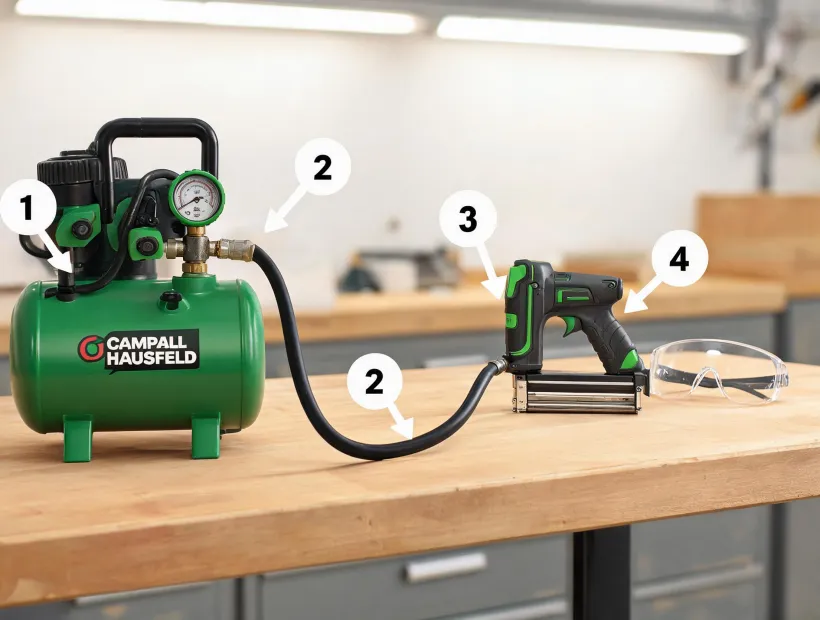
Roadmap
Name the task first: inflation, trim fastening, cleaning, impact work, or painting. The job narrows the pressure, airflow, tank, and accessory conversation immediately.
Compare compressor size, recovery behavior, and available power before adding tools. A setup that feels easy on day one is usually the one matched to work rhythm.
Use the right hose, coupler, regulator setting, and safety check. Keep the connection sequence visible so first-time users are not guessing under pressure.
Drain moisture, check filters, store accessories together, and write down symptoms early. Small habits protect the compressor and make service questions easier later.
Guide topics
Understand why the gauge, regulator, and tool rating need to agree before fastening or inflating.
Learn why repeated trigger pulls, recovery time, and larger air tools can change the compressor choice.
Plan hose length, fitting type, coupler access, and storage so the air line helps instead of getting in the way.
Drain the tank, protect moving parts, organize consumables, and document changes before a small issue grows.
Resources that support the guide
Keep model-specific instructions close when checking oil, draining the tank, or confirming operating limits.
Use fittings, hose, fasteners, filters, and oil as part of the setup instead of afterthoughts.
Prepare the model number, symptom, and project details before asking for local help or replacement parts.

Review pressure, fittings, work area, eye protection, and storage before the first test run.
Send the project notes, air-tool type, compressor model if known, and where the tool will be used. The better the context, the more useful the recommendation.