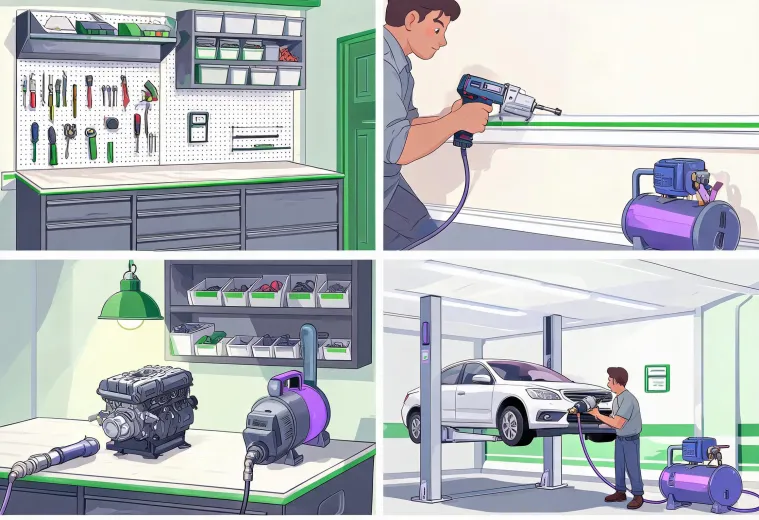
Air tools appear in many places, but the questions are different in each one. A garage needs portability and simple storage. A trim crew needs fastening rhythm. A maintenance room needs dependable pressure and parts planning. The application view below keeps those differences visible.
Choose by the work in front of you
Common settings for air-powered tools
Home Garage and DIY Repair
Inflation, cleaning, light fastening, and weekend repairs usually reward compact storage, manageable sound, and a simple accessory path. A helpful recommendation considers how often the compressor moves, whether the user shares a circuit, and which small tools are likely to come next.
Nailers and staplers need consistent pressure, the right fastener range, and hose movement that does not fight the user. The buying conversation should include nail size, depth adjustment, working distance, and whether the compressor must follow the crew from room to room.
Repeated service tasks make recovery time, regulator visibility, drain habits, and accessory organization more important. Teams often need guidance that ties the compressor to multiple tools instead of treating each tool purchase as a separate decision.
Impact tools, tire inflation, cleaning, and occasional painting each place different demands on airflow and setup. Practical support can help a buyer decide when a portable unit is enough and when a larger shop compressor is the calmer long-term choice.
Before asking for help, gather the information that changes the answer. A short note about tool type, work frequency, portability, power access, and accessory needs is often more useful than a long product wish list.
Match the setup to the setting
Describe your work area and get tool guidance
Tell us where the compressor will live, which pneumatic tools you expect to run, and whether portability or recovery time matters most. The answer can point you toward a cleaner starting setup.